Ideal victim
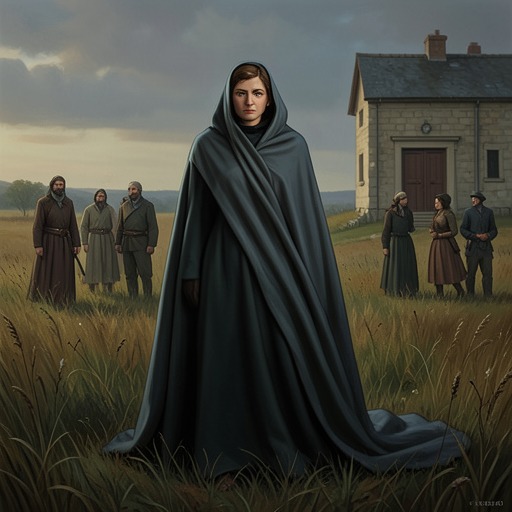
Say NothingIdeal victim is the term used for a person understood to be an innocent, passive civilian rather than a participant in conflict. In the book’s account of The Troubles, the category exposes a fault line in public memory: people’s judgments about a victim could turn on suspected affiliations as much as on the violence suffered. Jean McConville, a widow and mother of ten, became a stark test of that distinction, and of whether any allegation could make her abduction and murder defensible.
Definition and moral stakes
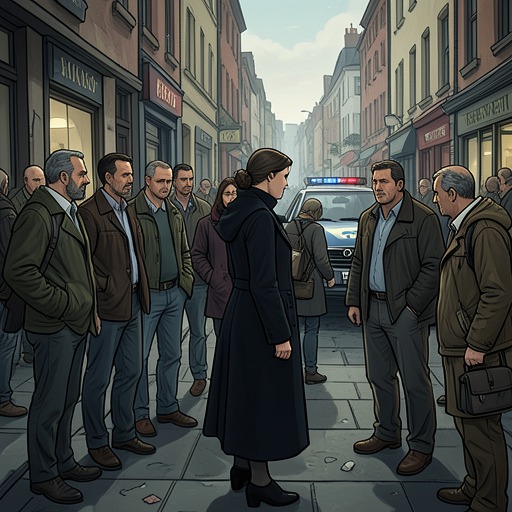
A scholar’s definition of the ideal victim emphasizes non-combatant status and passivity. The category therefore does more than describe a person’s circumstances: it offers a way to decide whose suffering is readily recognized as innocent, and whose may be treated as politically qualified. In a society divided by The Troubles, the same victim could be placed on opposite sides of that boundary depending on the observer’s assumptions about the conflict.
The book draws a firm distinction between disputed status and moral justification. Even if, for argument’s sake, Jean McConville had been an informer, that allegation could not justify her murder and disappearance. The claim that she was a combatant by proxy appears not as a resolution of the facts, but as a way some people denied her the standing of a victim. The term thus reveals how a label can shape public sympathy without changing what was done to the person concerned.
Jean McConville as a contested example
To many people, McConville seemed to fit the category: she was a widow and a mother of ten, not an armed participant. To others, the allegation that she had informed on the IRA recast her as someone implicated in the conflict. That contrast made her case a measure of how political interpretations could determine whether a person was seen as a civilian victim at all.
The book refuses to make recognition conditional on settling that dispute. The allegation remained part of the story surrounding her disappearance, but it did not reduce the responsibility to explain her fate or turn her killing into a legitimate act. The force of the example lies in that separation: uncertainty about a victim’s alleged conduct is not the same as uncertainty about whether murder and disappearance can be justified.
Hierarchies, comparison, and accountability
The idea of an ideal victim sits within a wider dispute over a hierarchy of victims. In arguments about investigations of former paramilitaries and former British soldiers, questions of fairness often became questions of comparison: whether the numbers of cases against different groups were balanced, and whether any balance could be measured without itself appearing partisan. The point was not simply that different sides had suffered; it was that public outrage and demands for accountability could be shaped by the affiliation of both victim and perpetrator.
Whataboutery gave that contest a familiar form. Mentioning McConville could prompt a counter-invocation of Bloody Sunday, followed by Bloody Friday, the murder of Patrick Finucane, the La Mon bombing, the Ballymurphy massacre, Enniskillen, or McGurk’s bar. Each reference brought another atrocity into view, but the repeated chain of comparisons could also displace attention from the case at hand. In this pattern, one victim’s claim was answered not on its own terms but with a demand to account for another.
The lack of an agreed framework for dealing with the past intensified these disputes. The Good Friday Agreement provided for the release of paramilitary prisoners held at the time and capped at two years any future sentences for Troubles-related crimes, but it established no general truth-and-reconciliation process and no broad exchange of testimony for amnesty. Because the conflict ended in a stalemate rather than a clear victory, there was no shared settlement about how its history should be understood or commemorated. A limited amnesty did apply under 1999 legislation for people who voluntarily supplied information to help recover the disappeared, but unresolved murders otherwise remained open criminal cases.
That gap left accountability ad hoc: inquests, police investigations, and government inquiries pursued old cases without a common mechanism that could satisfy competing demands. The Police Service of Northern Ireland maintained a legacy unit with a backlog of nearly a thousand cases. In this setting, the question of who counted as an ideal victim was inseparable from the question of whether authorities were investigating all sides fairly—and from the suspicion that any selection of cases could be read as political bias.
The book’s framing and its limits
The book treats disputes over victimhood as part of the history it examines, while acknowledging limits to its own account. Its source note describes a research process that sought corroboration for individual recollections and placed discrepancies or alternative versions in the notes. It also states that the narrative does not address every aspect of The Troubles and hardly mentions loyalist terrorism. That admission matters where claims of selective attention are themselves politically charged.
The dispute over requests for Boston College interviews illustrates the problem. After the Police Service of Northern Ireland sought tapes relating to McConville’s killing, critics alleged that the inquiry was politically motivated because it sought republican interviews while loyalist violence also demanded attention. Boston College argued that ignoring interviews with members of the Ulster Volunteer Force lent support to that charge; the British government then requested a loyalist interview as well. The episode shows how the ideal-victim question extended beyond one person: the selection of whose testimony to pursue could itself become evidence, for different audiences, of whose suffering counted.